
Sunday Art dialogue: When Painting Began to listen.
Art Music and Movement
What happens when art begins to listen to music — and music begins to see itself?
Some of the most exciting moments in modernism occurred when artists, composers, dancers and performers stepped beyond the boundaries of their own disciplines.
Painting discovered rhythm; music embraced silence; dance became an exploration of movement itself.
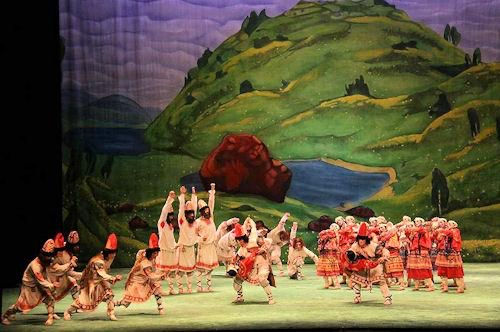
In 1913, Sergei Diaghilev's Ballets Russes transformed the relationship between visual art, music and dance with revolutionary collaborations, including Igor Stravinsky, the stage became a meeting place for modernism.
Wassily Kandinsky believed that colour, line and form could speak directly to the soul, much as music does, creating compositions that seem to pulse with their own inner music.
The Dada movement brought chance, absurdity, poetry, sound and performance into the artistic arena. It questioned the conventions of culture itself.
Composer John Cage and choreographer Merce Cunningham challenged the assumption that music and dance must always follow the same narrative or emotional direction.
Many years later, Gerhard Richter created his remarkable Cage paintings, a series of abstract works made in 2006 while listening to the music of John Cage.
They do not illustrate music; rather, they invite us to consider painting as an independent experience, with rhythms and silences of its own.
My own encounter with Cage came through an invitation for dinner from Barry Martin, my colleague from my Mayfair gallery days and chairman of Chelsea Arts Club chess committee.
Cage was reflective with his guest Teeny Duchamp and he spoke mainly with Barry as I was rather overwhelmed by the occasion and said very little.
Looking back, I treasure the memory not because I had some brilliant conversation, but because I found myself in the company of people whose lives and ideas had helped reshape the boundaries of modern art.
Artists listened to composers; composers watched dancers; painters discovered new ways to make time, movement and chance visible.
Have you ever encountered a work of art that changed the way you hear music?



Comments