
Sunday Art Dialogue: Trees..Nature's Greatest Work of Art
Updated: Jun 10
For the British Romantic painter Samuel Palmer, trees were not just background elements; they were living, breathing entities. In his visionary landscapes, trees are often anthropomorphised with gnarled, twisting trunks and vibrant, glowing blossoms, symbolising the intense spiritual and natural abundance in the English landscape.
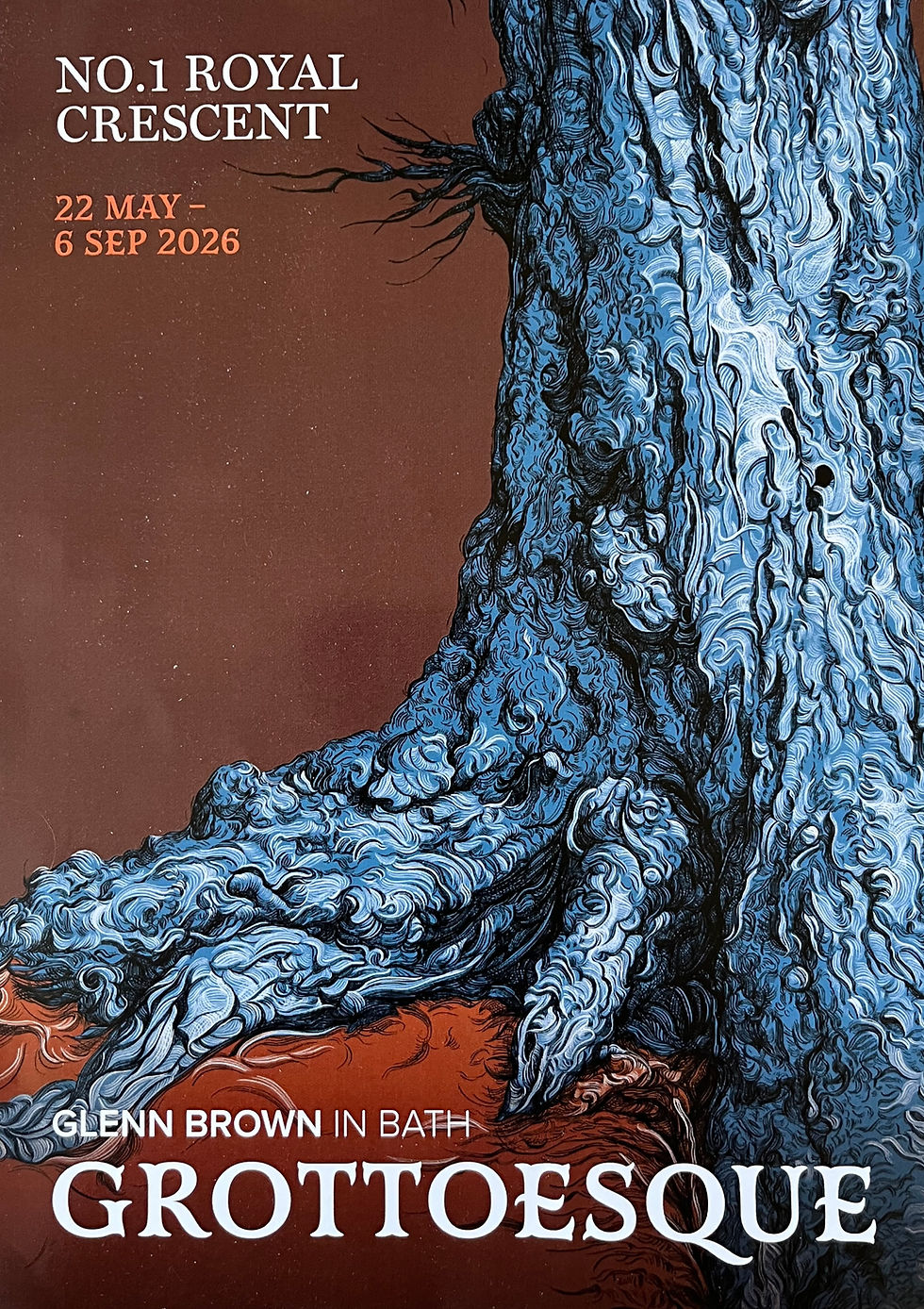
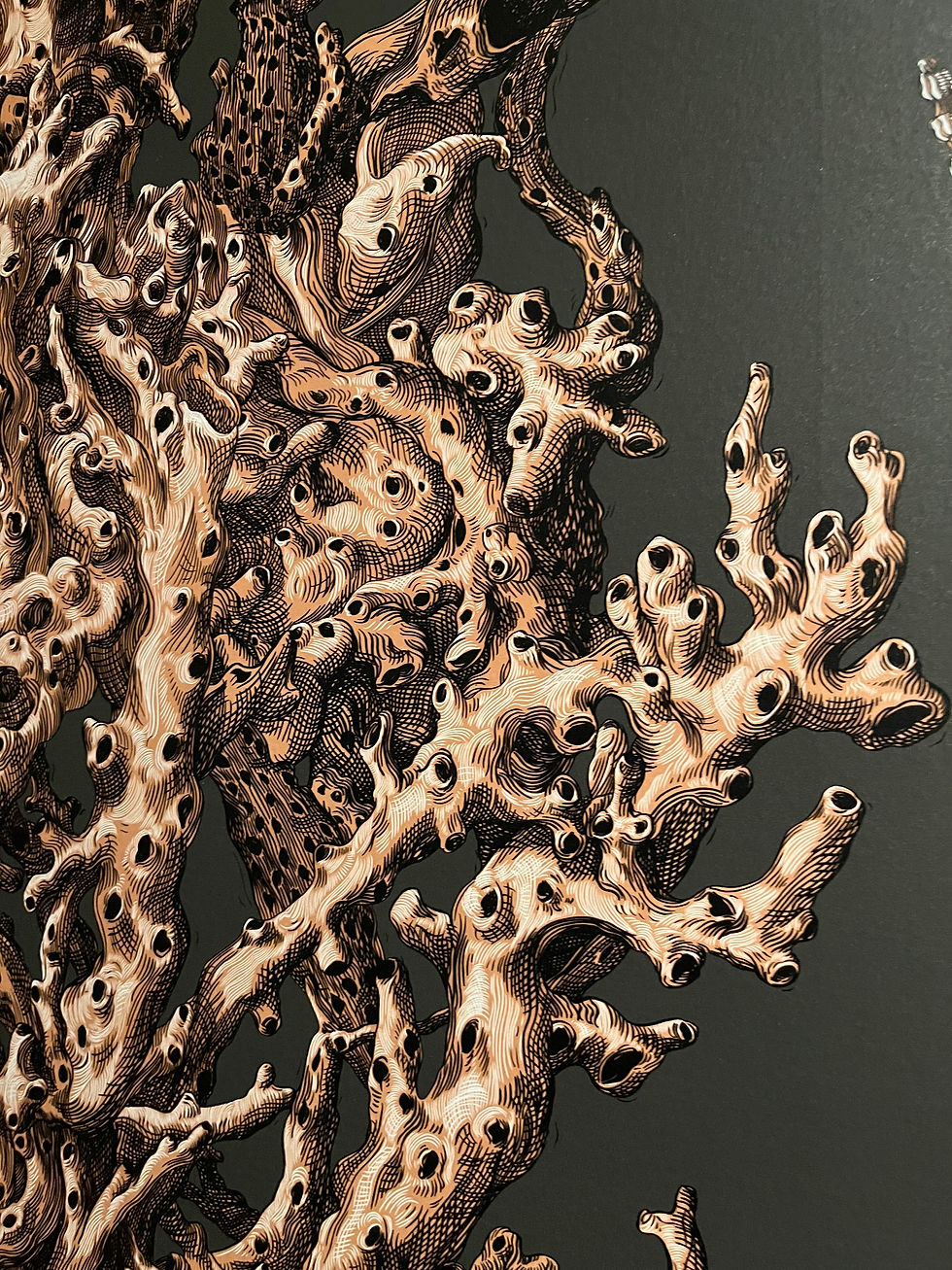
In the current exhibition by Glenn Brown at No.1 Royal Crescent in Bath, Grottoesque, which I visited recently, Brown invites one into a world of transformation and mystery. His works seem to possess something of Palmer's visionary spirit, where familiar forms dissolve into dreamlike images which question our relationship with nature and encourage one to look beyond appearances and to rediscover wonder within his trees.
This resonates strongly for me having curated several exhibitions over the years all underpinned by the many moods, colours and meanings of the natural world which are explored through art.
Of course other artists have been fascinated by trees over the centuries from Leonardo da Vinci's detailed studies of tree growth and branching patterns to Vincent Van Gogh's cypresses, olives trees and blossoming orchards which became some of his most expressive subjects. Mondrian's famous tree series charts a journey from representation to abstraction and Anslem Kieter uses forests and trees as symbols of history, memory and regeneration, while the sculptor Giuseppe Penone, associated with the Arte Povera movement, works directly with trees to explore growth and time.
Modern science has added another dimension to our understanding of trees as we now know that they communicate with one another through underground fungal networks. Many contemporary artists explore the idea that in a sense trees communicate with us. Not through words, but through presence.
Their message as nature's greatest work of art is one of connection: between past and future, a living archive of time, resilience and renewal. They remind us that there is often more to see than first meets the eye.


Comments